37 Black History Facts Banned From Your Textbooks (What They're Still Hiding in 2026)
American history classrooms have a truth problem. While students memorize dates of famous battles and presidential inaugurations, an entire dimension of the nation's story remains conspicuously absent from standardized curricula. This isn't accidental omission—it's systematic erasure shaped by textbook adoption committees, state education standards, and political pressure campaigns that have intensified rather than diminished in recent years.
The facts that follow aren't fringe theories or disputed interpretations. They're documented historical events, verified contributions, and measurable achievements supported by primary sources, academic research, and archival evidence. Yet most American students will graduate without encountering them in any classroom.
What makes a historical fact "too controversial" for a textbook? Why do certain narratives survive the editing process while others vanish between draft and publication? And what does it cost a society when entire generations learn a incomplete version of their own national story?
The answers reveal uncomfortable truths about power, memory, and whose voices get to shape collective understanding of the past.
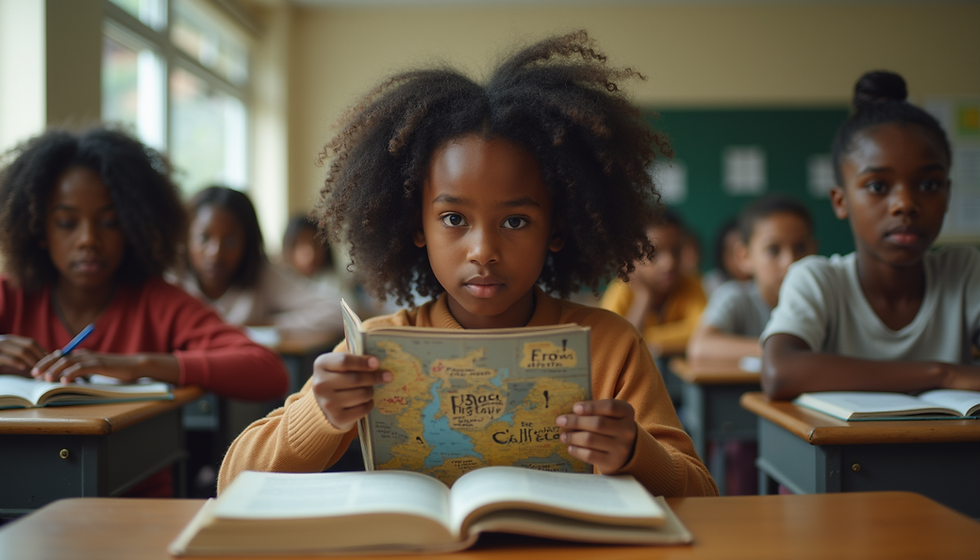
Why Black History Remains Censored in American Classrooms
The 1619 vs. 1776 Curriculum Battle Explained
The debate over when America's "true" founding occurred has transformed from academic discussion into legislative battleground. The 1619 Project, developed by journalist Nikole Hannah-Jones and published by The New York Times Magazine, reframes American history by centering the arrival of enslaved Africans in Virginia as a foundational national moment. This perspective examines how slavery's economic, political, and social systems fundamentally shaped American institutions.
By 2024, at least 18 states had introduced or passed legislation restricting how teachers can discuss slavery, racism, and American history. These laws often prohibit teaching that the United States is "inherently racist" or that any individual should feel "discomfort" because of their race when learning history. While proponents frame these measures as preventing divisive concepts, critics—including the American Historical Association and the Organization of American Historians—argue they create chilling effects that discourage teaching accurate history.
The practical result: teachers self-censor, textbook publishers preemptively remove potentially controversial content, and students receive sanitized versions of historical reality. A 2023 study by the Southern Poverty Law Center found that only 8% of high school seniors could identify slavery as the central cause of the Civil War, despite this being the explicit justification provided in Confederate states' secession documents.
How State Education Boards Control Historical Narratives
Texas and California, as the nation's largest textbook markets, wield disproportionate influence over what appears in history books nationwide. When these states adopt curriculum standards, publishers typically create content satisfying those requirements—and then sell the same versions to smaller states to maximize profitability.
The Texas State Board of Education, in particular, has repeatedly voted to downplay slavery's role in American history. In various editions of standards adopted between 2010 and 2022, the board has: Referred to enslaved people as "workers" and "immigrants"
Described the Atlantic slave trade as part of patterns of "immigration"
Minimized slavery as a Civil War cause in favor of "states' rights" and "sectionalism"
Required teaching that the Confederacy fought for "state sovereignty"
These decisions ripple through textbooks used in classrooms from Arizona to Ohio. McGraw-Hill, one of the largest educational publishers, issued a widely-criticized textbook in 2015 that included a map showing "The Atlantic Slave Trade" with a caption describing how it brought "millions of workers from Africa to the southern United States to work on agricultural plantations."
After parent complaints and social media backlash, the publisher revised the language—but only after thousands of books had already been distributed.
Legal Loopholes That Erase Inconvenient Truths
The evolution of what can't be taught often matters more than what must be taught. Recent legislative language creates compliance uncertainty that pushes educators toward the safest possible interpretation—which typically means avoidance.
Florida's Individual Freedom Act (2022), often called the "Stop WOKE Act," prohibits instruction that suggests anyone is "inherently racist, sexist, or oppressive, whether consciously or unconsciously" based on their race or sex. While courts have partially blocked enforcement in universities, K-12 provisions remain active.
Similar laws in Tennessee, Oklahoma, and Iowa use vague terminology like "divisive concepts" and "discomfort" without defining clear boundaries. This legal ambiguity creates what education researchers call "anticipatory compliance"—teachers avoid topics before receiving any complaint because the professional risk outweighs the educational benefit.
A 2024 survey of 1,200 social studies teachers conducted by the RAND Corporation found that 65% had reduced discussion of racism in American history, 58% avoided current events involving race, and 42% had stopped using primary source documents from enslaved people or civil rights activists—despite these sources being historically invaluable.
The result is a generation learning history through systematic omission.
Pre-Colonial African Civilizations They Never Mention
The Mansa Musa Empire: Richer Than All European Kingdoms Combined
When Mansa Musa, emperor of the Mali Empire, made his pilgrimage to Mecca in 1324, he traveled with a procession of 60,000 people, including 12,000 enslaved servants dressed in silk. He carried so much gold that his spending in Cairo caused currency inflation that lasted over a decade.
Economists and historians estimate Musa's wealth at approximately $400 billion in today's dollars, making him possibly the richest person in human history. Yet most American history curricula skip directly from ancient civilizations to European exploration, creating the false impression that Africa lacked sophisticated political and economic systems before colonialism.
The Mali Empire controlled critical gold and salt trade routes across the Sahara, operated a complex bureaucratic government, and maintained diplomatic relationships with states across North Africa and the Middle East. Timbuktu, its intellectual capital, housed over 25,000 university students when London's population barely exceeded 15,000.
This omission isn't accidental—it contradicts narratives used to justify enslavement and colonization. If African civilizations achieved wealth, learning, and political sophistication rivaling or exceeding European societies, what moral justification existed for treating Africans as property?
Timbuktu's Universities: Academia Before Oxford Existed
The University of Sankore in Timbuktu was established around 989 CE—over 200 years before Oxford University received its charter and 250 years before Cambridge was founded. At its peak in the 15th and 16th centuries, Timbuktu operated three major universities and over 180 Quranic schools, with a total student population exceeding 25,000.
The libraries of Timbuktu housed hundreds of thousands of manuscripts covering mathematics, astronomy, medicine, chemistry, physics, optics, law, and literature. These weren't simple religious texts but sophisticated academic works. Scholars debated mathematical concepts, documented surgical procedures, and produced astronomical calculations that guided trans-Saharan navigation.
Ahmed Baba, a 16th-century scholar from Timbuktu, personally owned a library of 1,600 books—at a time when European personal libraries rarely exceeded 100 volumes. His legal writings on Islamic jurisprudence influenced scholarship across North and West Africa.
Why does this matter for American education? Because the narrative of African intellectual inferiority underpinned slavery's moral justification. Thomas Jefferson, in his "Notes on the State of Virginia," argued that Black people lacked capacity for higher learning. Yet West African intellectual traditions predated and paralleled European academic development.
The manuscripts of Timbuktu survived—many are being preserved and digitized today through projects like the Timbuktu Manuscripts Project. Yet their existence remains absent from the vast majority of American world history courses.
Great Zimbabwe's Architecture: Advanced Engineering Without European Contact
Between the 11th and 15th centuries, the Shona people built Great Zimbabwe, a stone city covering nearly 1,800 acres with walls reaching 36 feet high and 20 feet thick—constructed without mortar. The precision stonework demonstrates sophisticated understanding of engineering, mathematics, and architectural planning.
Great Zimbabwe served as the capital of the Kingdom of Zimbabwe, controlling the gold and ivory trade routes between inland Africa and the Swahili coast. At its peak, the city housed between 10,000 and 20,000 people and served as the political and spiritual center of a civilization that extended across modern Zimbabwe, Mozambique, and South Africa.
When European colonizers encountered the ruins in the late 19th century, they refused to believe Africans had built them. Archaeologists and treasure hunters, operating under racist assumptions, attributed the structures to Phoenicians, Arabs, or even the biblical Queen of Sheba—anyone except the indigenous Shona people.
The Rhodesian government (named after colonizer Cecil Rhodes) actively suppressed archaeological evidence of African origin well into the 1970s. Researchers who concluded the structures were built by Africans faced professional consequences and publication censorship.
This pattern of erasure and misattribution extends beyond Great Zimbabwe. The Nubian pyramids of Sudan (more numerous than Egyptian pyramids), the Benin Bronzes (sophisticated metalwork that European artists initially claimed impossible without European influence), and the stone churches of Lalibela in Ethiopia all challenged racist assumptions about African capability—and all remain largely absent from American curricula.
The Economics of Slavery Schools Won't Teach
Wall Street's Founding on Slave Trade Insurance
Wall Street's origins trace directly to the slave trade, but not in the way most people imagine. The name itself comes from a wall built by enslaved people in 1653 to protect the northern boundary of New Amsterdam (later New York City). But the deeper connection runs through financial instruments.
By the mid-1700s, New York had emerged as a major slave trading port. The city's banks, insurance companies, and trading houses profited immensely from slavery through several mechanisms:
Insurance policies on enslaved people: Companies like New York Life, Aetna, and their predecessor firms wrote policies insuring enslaved people as property. If an enslaved person died during transport or on a plantation, the owner received compensation. These policies transformed human beings into fungible assets and spread the financial risk of slavery across investors who might never directly own slaves but profited from the system.
Bonds secured by enslaved people as collateral: Southern planters used enslaved people as collateral for loans from Northern banks. Citizens Bank of Louisiana, Bank of the United States, and other major financial institutions accepted human beings as security for capital that financed plantation expansion.
Trading in cotton futures and commodities: New York's commodity markets traded cotton futures, creating sophisticated financial instruments built on forced labor. The New York Cotton Exchange, founded in 1870 but with roots in pre-war trading, standardized contracts that treated the product of enslaved labor as a neutral commodity.
A 2016 analysis by historian Katia Slosser found that by 1860, the value of enslaved people in the United States exceeded the combined value of all railroads and factories. Enslaved people represented the largest asset class in the American economy besides land itself.
When these institutions are mentioned in business history or economics classes, the slavery connection typically vanishes. Students learn about American financial innovation without understanding that many foundational instruments and practices emerged from the commodification of human beings.
How Northern Industrial Wealth Depended on Southern Cotton
The popular narrative divides America into "free North" and "slave South," but economic reality was far more interconnected. Northern industrial capitalism and Southern plantation slavery weren't separate systems—they were symbiotic parts of a single economy.
Textile mills: Massachusetts, Rhode Island, and New Hampshire built massive textile industries entirely dependent on slave-grown cotton. The Lowell mills, often celebrated as early American industrial achievements, processed cotton picked by enslaved people. Mill owners didn't need to own slaves directly; the system's structure made them integral beneficiaries.
Shipping and trade: Northern ships transported enslaved people, raw cotton, and finished goods. Ship owners, merchants, and sailors from "free" states accumulated wealth through this trade. New York, Boston, and Providence were major slave trading ports even after the legal importation of enslaved people ended in 1808, as domestic slave trading remained profitable.
Financial services: Northern banks financed plantation operations through loans secured by enslaved people and land. When planters needed capital for expansion, Northern financiers provided it at profitable rates.
The economic incentive to maintain slavery extended far beyond the South. Sven Beckert's book "Empire of Cotton" documents how a global industrial revolution depended on the cheapest possible cotton—which required the cheapest possible labor. Slavery provided that foundation.
When Abraham Lincoln signed the Emancipation Proclamation, he didn't just free enslaved people in Confederate territories—he destabilized a global economic system that connected Southern plantations, Northern factories, British textile mills, and international financial markets.
This context rarely appears in history or economics classes because it complicates morally comfortable narratives about regional differences and Northern virtue.
The Financial Value of Enslaved People vs. Modern GDP Equivalents
In 1860, the total value of enslaved people in the United States was approximately $3 billion—about $12 trillion in 2024 dollars after adjusting for inflation. To contextualize:
This exceeded the value of all American manufacturing and railroads combined
It represented more capital than had been invested in any other sector of the economy
It was roughly equivalent to 1.5 times the GDP of the entire nation
Individual enslaved people were valued based on age, gender, skills, and health. A skilled blacksmith might be valued at $2,000 (roughly $65,000 in 2024), while an unskilled field hand averaged $800 ($26,000 today). These weren't abstract figures—they appeared on balance sheets, in estate valuations, and in collateral assessments for loans.
Slaveholders understood their "property" as investments requiring calculation and optimization. They tracked depreciation (aging), made capital improvements (training in skills), and managed risk (through insurance and medical care that preserved value rather than human wellbeing).
After emancipation, this capital evaporated without compensation to the enslaved. The 13th Amendment didn't include reparations or redistribution. Four million people transitioned from property to poverty without land, capital, or resources. Meanwhile, slaveholders—especially those in border states who remained loyal to the Union—received compensation in some cases, or at minimum retained land and other assets.
This context matters when discussing contemporary wealth gaps. The racial wealth divide in America didn't emerge from different cultural attitudes toward money or work ethic—it originated from the largest unpaid forced labor regime in modern history, followed by deliberate exclusion from wealth-building mechanisms like homeownership, GI Bill benefits, and business capital access.
Yet these economic realities remain largely absent from curriculum standards, standardized tests, and typical classroom instruction.
Reconstruction's Assassinated Promise (1865-1877)
America's First Black Senators and Their Legislative Achievements
Between 1870 and 1877, sixteen Black men served in Congress—two in the Senate and fourteen in the House of Representatives. This represents a level of Black political representation in some states that wouldn't be matched again for over a century.
Hiram Revels of Mississippi became the first Black U.S. Senator in 1870, ironically filling the seat previously held by Jefferson Davis before he became president of the Confederacy. Revels advocated for desegregation of schools and equal access to public accommodations, arguing in congressional speeches that Black Americans had proven their citizenship through military service and deserved full equality.
Blanche K. Bruce, also from Mississippi, served a complete six-year Senate term (1875-1881), making him the first Black senator to do so. Bruce advocated for Black veterans' pensions, opposed Chinese exclusion legislation, and pushed for better treatment of Native Americans. His maiden speech argued for seating a contested Louisiana senator, demonstrating political sophistication and cross-racial coalition building.
In the House, representatives like Robert Smalls (who famously commandeered a Confederate ship during the war), Joseph Rainey, and Robert Elliott championed civil rights legislation, education funding, and economic development for formerly enslaved people.
These weren't token appointments or symbolic gestures—these legislators won competitive elections in states with Black voting majorities and governed effectively. South Carolina's state legislature in 1868 was majority Black, the only time this has occurred in American history.
Why don't students learn about this? Because Reconstruction's success challenges narratives about Black political incapacity that were used to justify Jim Crow. If Black political leadership thrived when given opportunity, the subsequent century of disenfranchisement appears as what it was: deliberate suppression rather than natural social order.
The Wilmington Massacre: America's Only Successful Coup
On November 10, 1898, a white supremacist mob overthrew the legitimately elected biracial government of Wilmington, North Carolina, murdered between 60 and 300 Black residents, and forced the resignation of the mayor and city council at gunpoint.
This wasn't a riot or spontaneous violence—it was a calculated, pre-planned coup d'état carried out by wealthy white business leaders, published openly in newspapers, and executed with military precision.
The context: Wilmington in 1898 had a thriving Black middle class, Black-owned businesses, and a coalition government of Black Republicans and white Populists. Black men voted, held office, and exercised economic power. This challenged white Democratic Party control.
The planning: White supremacist leaders, including Alfred Moore Waddell (who would become the post-coup mayor), openly declared their intention to seize power. The Wilmington Messenger published what became known as the "White Declaration of Independence," stating that white men would no longer tolerate Black political participation.
The execution: Armed white men, estimated between 400 and 2,000, descended on Black neighborhoods. They destroyed the offices of the Black-owned Daily Record newspaper, set fire to Black homes and businesses, and shot Black residents who resisted or fled. Eyewitness accounts describe bodies thrown into the Cape Fear River and mass graves dug in the woods.
The aftermath: The legitimately elected officials were forced to resign at gunpoint and leave the city. Waddell installed himself as mayor. Black political and economic power in Wilmington was permanently destroyed. Not a single conspirator faced prosecution.
This coup succeeded completely. It also established a template for white supremacist violence across the South during the Jim Crow era—use terror to override democratic outcomes when they threaten white political control.
The Wilmington Massacre remained largely unknown outside North Carolina until the 1990s. It doesn't appear in most U.S. history textbooks even today. When students learn about the end of Reconstruction, they typically hear vague explanations about "Northerners losing interest" or "compromise"—not about sustained terrorist campaigns that overthrew democratic governments through violence.
How Textbooks Romanticize "Redemption" as Southern Recovery
The period following Reconstruction is traditionally called "Redemption" in historical texts—language that frames white supremacist violence as Southern salvation rather than the destruction of multiracial democracy.
The framing problem: Words like "redemption," "restoration," and "reconciliation" suggest correcting something wrong rather than overthrowing something right. These terms treat Black political participation as the aberration and white supremacist rule as the natural order being recovered.
The classic narrative goes: Northern troops withdrew, carpetbaggers left, and Southern society returned to stability. This euphemistic language obscures systematic terrorism.
What actually happened: White supremacist paramilitary groups—the Ku Klux Klan, the White League, the Red Shirts—used assassination, economic intimidation, and mass violence to prevent Black voting and destroy biracial political coalitions. These weren't random attacks but coordinated campaigns with explicit political goals.
The Hamburg Massacre (1876), the Colfax Massacre (1873), the Opelousas Massacre (1868), and dozens of similar incidents involved armed white supremacists killing Black citizens attempting to vote or hold office. The death toll ran into the thousands. Federal authorities occasionally intervened but lacked resources and political will for sustained enforcement.
The textbook treatment: Many textbooks still use "Redemption" terminology without irony or critical examination. They describe the end of Reconstruction as inevitable or even desirable "reconciliation" between North and South. The violence appears as unfortunate excess rather than systemic strategy.
A 2018 analysis by the Zinn Education Project examined fifteen widely-used U.S. history textbooks and found that most devoted more space to the disputed 1876 election than to the organized violence that made Black voting impossible across the South. Terrorism becomes a footnote while political compromise gets detailed analysis.
This matters because it teaches students that multiracial democracy failed due to its own unsustainability rather than being murdered through domestic terrorism that the federal government failed to prevent.
The Tulsa Massacre and 26 Other Destroyed Black Wall Streets
Black Prosperity Communities Erased by State-Sanctioned Violence
The Tulsa Race Massacre of 1921 destroyed the Greenwood District, known as "Black Wall Street"—35 city blocks of Black-owned businesses, homes, churches, schools, hospitals, and theaters burned to the ground by white mobs supported by local law enforcement and National Guard units deputizing white rioters.
The attack began after a Black teenager allegedly assaulted a white woman in an elevator (evidence suggests he merely stumbled). When Black veterans attempted to prevent the teenager's lynching, white Tulsans mobilized thousands of attackers, some in private aircraft dropping firebombs on Black neighborhoods.
Over two days, the mob killed an estimated 300 Black residents, injured 800, and left 10,000 homeless. Not a single white attacker faced prosecution. Insurance companies denied claims, citing "riot" exclusions. The city buried the history for decades.
But Tulsa wasn't unique—it was one of dozens of prosperous Black communities destroyed through organized violence:
Rosewood, Florida (1923): A white mob destroyed the entire Black town of Rosewood over six days, killing at least six Black residents (possibly dozens more). The town never recovered. Survivors fled and the community ceased to exist.
Ocoee, Florida (1920): After Black residents attempted to vote, white mobs burned Black homes and churches, killing between 30 and 50 people. Ocoee's Black population, which had been about 25% before the massacre, dropped to zero and remained zero for decades.
Elaine, Arkansas (1919): White mobs and federal troops killed an estimated 100-240 Black sharecroppers attempting to organize for better pay. Bodies were thrown into the Mississippi River. Twelve Black survivors faced murder trials; none of the white attackers were charged.
Atlanta (1906): White mobs rampaged through Black neighborhoods for four days after inflammatory newspaper reports about Black men allegedly assaulting white women. At least 25 Black people died; estimates run as high as 100.
East St. Louis, Illinois (1917): White mobs killed between 40 and 250 Black residents in response to Black migration to the city for industrial jobs. Thousands of Black residents fled permanently.
Springfield, Illinois (1908): White mobs destroyed Black neighborhoods in Abraham Lincoln's hometown, lynching two Black men and forcing 2,000 Black residents to flee. This violence directly inspired the founding of the NAACP.
A 2020 report by the Equal Justice Initiative documented at least 26 significant episodes of mass racial violence that destroyed Black communities between 1877 and 1950. The pattern was consistent: Black economic success triggered white resentment, a minor incident (often fabricated or exaggerated) provided pretext, and organized mobs destroyed Black wealth while authorities either participated or stood aside.
The Rosewood Massacre Cover-Up Timeline
Rosewood, Florida, was a prosperous Black town with a population of about 350 in 1923. Residents owned homes, land, businesses, and lived independently—which created resentment among nearby white communities.
January 1, 1923: Fannie Taylor, a white woman in nearby Sumner, claimed a Black man assaulted her. Evidence suggests she fabricated the story to cover bruises from a white lover, but white residents immediately mobilized to find the alleged attacker.
January 1-7, 1923: White mobs from surrounding towns descended on Rosewood, initially searching for the alleged attacker but quickly expanding to attacking any Black residents. They burned churches, homes, and the Masonic lodge. They killed at least six Black residents, though survivor accounts suggest the toll was far higher. Many bodies were never recovered.
Black residents fled into swamps and nearby forests. Some were sheltered by John and William Bryce, white train conductors who helped evacuate women and children by rail. Most survivors never returned.
The cover-up: White officials and newspapers minimized the violence. Official reports claimed only two white men and six Black people died (implying equivalent violence on both sides, which was false). The town of Rosewood was abandoned and eventually disappeared from maps.
Decades of silence: Survivors rarely discussed the massacre publicly, fearing retaliation. The Florida legislature conducted no investigation. The incident vanished from state historical records.
1982-1994: A reporter for the St. Petersburg Times investigated survivor accounts and uncovered the truth. In 1994—71 years after the massacre—Florida became the first state to compensate survivors and descendants of racial violence, providing $2.1 million in reparations and college scholarships.
The pattern of erasure followed most racial massacres: minimize death tolls, blame victims, conduct no prosecutions, create no historical record, and wait for survivors to die.
Rosewood appears in virtually no American history textbooks despite its clear historical significance and eventual state recognition.
Modern Reparations Cases and Legal Precedents
In 2020, a lawsuit on behalf of the last three known survivors of the Tulsa Race Massacre sought reparations from the city and state. The plaintiffs argued that Tulsa's failure to address the destruction constituted ongoing harm through lost generational wealth, educational opportunities, and economic stability.
A district judge dismissed the case in 2023, but appeals continued into 2024. The case raised critical questions about statutes of limitations for mass atrocities and whether governments bear responsibility for historical racial violence.
Other reparations efforts have achieved varying degrees of success:
Rosewood, Florida (1994): As mentioned, Florida compensated survivors with direct payments and created a scholarship fund for descendants. This established precedent for state-level reparations for specific incidents.
Japanese American Internment (1988): The Civil Liberties Act provided $20,000 to each surviving internee, accompanied by a formal apology. While not African American-focused, this demonstrated federal capacity for reparations.
Evanston, Illinois (2021): Became the first U.S. city to fund reparations specifically for Black residents, allocating $10 million over ten years for housing assistance to those who experienced housing discrimination.
California Reparations Task Force (2020-2023): California created a task force to study and develop reparations proposals. Their 2023 report recommended direct payments, free college, housing assistance, and business support specifically for descendants of enslaved people. Implementation remains uncertain as of 2026.
H.R. 40 (introduced 1989, reintroduced regularly): A federal bill proposing a commission to study reparations for slavery and discrimination. Despite decades of advocacy, the bill has never received a floor vote in Congress.
Legal obstacles remain significant: proving direct lineage to specific harms, overcoming sovereign immunity claims, addressing statutes of limitations, and generating political will for redistribution of resources.
Yet these cases establish important precedents: governments can acknowledge historical wrongs, compensate victims and descendants, and create remedial programs targeting specific harms.
Why don't students learn about destroyed Black communities and reparations debates? Because it contradicts narratives of steady racial progress and raises uncomfortable questions about who benefited from racial violence and whether current wealth reflects legitimate accumulation or theft that was never remedied.
Hidden Architects of American Innovation
Garrett Morgan: Traffic Lights and Gas Masks Your Teachers Skipped
Garrett Morgan invented two devices that fundamentally shaped modern urban life, yet most Americans have never heard his name.
The gas mask (1914): Morgan developed a "safety hood" with an air tube that drew clean air from ground level, protecting wearers from smoke and toxic gases. In 1916, Morgan personally used his invention to rescue workers trapped in a tunnel explosion beneath Lake Erie in Cleveland, entering the smoke-filled tunnel multiple times and saving several lives.
Despite this heroic demonstration, many fire departments refused to purchase the device once they learned its inventor was Black. Morgan employed a white actor to pose as "the inventor" at demonstrations across the South, while Morgan himself pretended to be the assistant. Even with this deception, sales in segregated markets remained limited.
The military eventually adopted modified versions during World War I, where gas warfare made Morgan's design essential. Yet credit often went to others, and Morgan's contribution was minimized or erased in contemporary accounts.
The traffic signal (1923): Frustrated by the dangerous inadequacy of two-position traffic signals, Morgan developed a three-position signal that included a "yield" phase between stop and go, allowing intersections to clear before changing direction. He patented the design and eventually sold the rights to General Electric for $40,000—a substantial sum, but likely far less than its true value.
Morgan's T-shaped signal with a "caution" position became the basis for modern traffic lights worldwide. Yet when traffic signal history appears in textbooks (usually in elementary school units on community helpers and transportation), Morgan's name rarely accompanies it.

Why the omission? Acknowledging Black inventors challenges narratives about who drives innovation and technological progress—narratives that have historically centered white (often European) ingenuity while erasing contributions from people of color.
Katherine Johnson's NASA Calculations That Put Humans on the Moon
Katherine Johnson's story reached mainstream awareness through the 2016 film "Hidden Figures," but her contributions remained obscure for decades despite their critical importance to American space achievements.
Johnson, a mathematician of extraordinary ability, joined NASA's predecessor organization NACA in 1953. She worked in the segregated "Colored Computers" section, where Black women mathematicians performed calculations for engineers—work requiring advanced mathematical skills but receiving little recognition.
Her critical contributions:
Mercury mission trajectory analysis (1961): When NASA prepared to send astronaut Alan Shepard into space, Johnson calculated the trajectory. John Glenn's orbital flight (1962) relied on Johnson's calculations to verify the electronic computer outputs—Glenn specifically requested that "the girl" (Johnson) check the numbers before he would trust them for his life.
Apollo 11 lunar landing calculations (1969): Johnson computed the trajectory that put Neil Armstrong and Buzz Aldrin on the moon. Without her work, the mission would have failed.
Apollo 13 emergency procedures (1970): When Apollo 13 experienced catastrophic equipment failure, Johnson's calculations helped determine the emergency procedures that brought the astronauts home safely.
Despite these contributions, Johnson and her Black female colleagues worked in segregated facilities, used separate bathrooms, and received no public recognition. Their work appeared in technical reports without attribution. When NASA's achievements were celebrated, the public face of those achievements was white and male.
Johnson didn't receive the Presidential Medal of Freedom until 2015—decades after her retirement and nearly a century after her birth. She died in 2020 at age 101.
Her story reveals how systemic racism operates through erasure: allow Black people to contribute, even to perform essential work, but remove their names from the record and ensure public credit flows elsewhere.
This matters in education because STEM fields continue to lack diversity. When students believe innovation is a white (and male) domain, they absorb messages about who belongs in these fields—messages contradicted by historical reality if that reality were taught.
Medical Breakthroughs by Black Doctors Attributed to Others
Black physicians and medical researchers made foundational contributions to modern medicine, often without recognition and sometimes with credit explicitly transferred to white colleagues:
Dr. Charles Drew (1904-1950): Developed the blood bank system and large-scale blood storage techniques that enabled life-saving blood transfusions during World War II. Drew directed the Red Cross blood bank but was forced to resign when the military implemented segregated blood supply policies—refusing blood from Black donors for white recipients, despite Drew's proof that blood type, not donor race, mattered medically.
Dr. Daniel Hale Williams (1858-1931): Performed the first successful open-heart surgery in 1893, operating on a stab wound patient's pericardium. He also founded Provident Hospital in Chicago, the first Black-owned and operated hospital in America, providing training opportunities for Black medical professionals systematically excluded from white institutions.
Dr. Jane Cooke Wright (1919-2013): Pioneered chemotherapy techniques and developed the system of testing cancer drugs on human tissue cultures before administering to patients—the foundation of modern personalized cancer treatment. She became the first woman president of the New York Cancer Society but faced double discrimination as a Black woman in medical research.
Dr. Patricia Bath (1942-2019): Invented the Laserphaco Probe for cataract treatment in 1986, improving outcomes for millions and becoming the first Black woman physician to receive a medical patent. She also documented racial disparities in blindness rates and advocated for "community ophthalmology" to address healthcare access inequities.
Dr. Vivien Thomas (1910-1985): Developed the technique for the Blalock-Thomas-Taussig shunt, a surgical procedure treating "blue baby syndrome" (a congenital heart defect). Thomas was a surgical technician, not a physician, and worked without credit for decades while Dr. Alfred Blalock received acclaim for techniques Thomas actually developed. Johns Hopkins didn't formally recognize Thomas's contributions until 1976.
Dr. Rebecca Lee Crumpler (1831-1895): First Black woman to earn an MD in the United States (1864). She focused on treating poor Black women and children in Boston and Richmond, documenting her clinical observations in "A Book of Medical Discourses" (1883)—one of the first medical texts authored by a Black woman.
Other critical contributors include:
Dr. William Augustus Hinton: Developed the Hinton Test for detecting syphilis (1930s)
Dr. Louis T. Wright: Introduced the intradermal smallpox vaccination and pioneered antibiotic treatment research
Dr. William Warrick Cardozo: Innovated sickle cell disease treatment protocols
Dr. Leonidas Berry: Pioneered gastroscopy techniques
Dr. Alexa Canady: First Black woman neurosurgeon in the United States
Dr. Ben Carson: Pioneered separation of conjoined twins joined at the head
Dr. Kizzmekia Corbett: Led NIH's coronavirus spike protein research that enabled mRNA vaccine development
These contributions appear sporadically if at all in medical history or science education. When Black medical pioneers are mentioned, it's often in supplementary "diversity" materials rather than integrated into core medical history—reinforcing the false impression that medical advancement is a white enterprise that occasionally included exceptional Black individuals rather than being a collaborative field to which Black physicians contributed foundationally despite systematic exclusion.
The Activist Histories Textbooks Sanitize
MLK's Anti-Capitalist Speeches Removed From Curricula
Dr. Martin Luther King Jr.'s image in American education has been sanitized into a non-threatening advocate for racial harmony, stripped of his radical economic critiques and systemic analysis.
The MLK of textbooks delivered the "I Have a Dream" speech and advocated nonviolent resistance—both true, but representing a fraction of his thought. The MLK who appears in sanitized curricula is acceptable to modern political sensibilities across the spectrum. The actual Martin Luther King Jr. was more threatening to established power.
What gets erased:
His criticism of capitalism: In a 1966 staff meeting, King stated: "You can't talk about solving the economic problem of the Negro without talking about billions of dollars. You can't talk about ending the slums without first saying profit must be taken out of slums. You're really tampering and getting on dangerous ground because you are messing with folk then. You are messing with captains of industry. Now this means that we are treading in difficult water, because it really means that we are saying that something is wrong with capitalism."
King increasingly identified systemic economic exploitation as central to racial injustice. He called for wealth redistribution, guaranteed income, and restructuring the economy to prioritize human need over profit.
His opposition to the Vietnam War: King's 1967 speech "Beyond Vietnam: A Time to Break Silence" condemned American imperialism and military intervention, calling the United States "the greatest purveyor of violence in the world today." This position cost him mainstream support and put him under intense FBI scrutiny.
He explicitly connected racism, economic exploitation, and militarism as interrelated systems requiring simultaneous challenge—what he termed the "triple evils."
The Poor People's Campaign: King's final organizing effort aimed to unite poor people across racial lines to demand economic justice through direct action in Washington, D.C. He was assassinated while supporting striking sanitation workers in Memphis—a labor action, not a Civil Rights march.
Why the sanitization?: Teaching King's actual political analysis would raise questions about contemporary economic systems, American foreign policy, and the relationship between capitalism and racial inequality. It's much safer to present him as an advocate for individual prejudice reduction and racial tolerance—important goals, but far narrower than King's vision.
This sanitization serves political purposes: conservatives can cite King's opposition to violent protest while ignoring his systemic critiques; liberals can celebrate his moral witness while avoiding his challenge to economic structures they benefit from.
Students encounter a Martin Luther King Jr. safe enough to have a federal holiday but stripped of the ideas that made him dangerous enough to assassinate.
Malcolm X Beyond the Soundbites: What Schools Fear Teaching
Malcolm X, when he appears in curricula at all, is typically presented as Martin Luther King Jr.'s violent, separatist counterpart—a foil used to make King's approach seem more reasonable by comparison.
This portrayal fundamentally distorts Malcolm's political thought and evolution while serving to discredit Black nationalism and self-determination philosophies.
The standard caricature: Malcolm X advocated violence, hated white people, and promoted separatism until his death.
The actual complexity:
His evolving philosophy: Malcolm's thought changed significantly throughout his life. His time in the Nation of Islam (1952-1964) shaped his early philosophy of Black separatism and white condemnation. But after his 1964 break with the Nation and his pilgrimage to Mecca, Malcolm's perspective shifted toward anti-racist rather than anti-white analysis.
In his autobiography, Malcolm reflected: "In the past, yes, I have made sweeping indictments of all white people. I will never be guilty of that again—as I know now that some white people are truly sincere, that some truly are capable of being brotherly toward a Black man. The true Islam has shown me that a blanket indictment of all white people is as wrong as when whites make blanket indictments against Blacks."
His critique of nonviolence: Malcolm didn't advocate initiating violence but argued for self-defense and questioned the strategic wisdom of absolute nonviolence against violent oppression. He stated: "It is criminal to teach a man not to defend himself when he is the constant victim of brutal attacks."
This position wasn't extremism but pragmatic assessment: when white supremacist violence faced minimal legal consequences, maybe moral suasion wasn't sufficient.
His international perspective: Malcolm connected African American liberation to anti-colonial movements globally. He brought the case of American racism before the United Nations, framing it as a human rights violation, not merely a domestic civil rights issue. This internationalist framing threatened American Cold War interests by aligning Black liberation with Third World decolonization.
His organizational work: Malcolm founded the Organization of Afro-American Unity (OAAU), which promoted Black political and economic independence, community control, and education reform. The platform included practical programs for housing, education, and economic development—not just rhetoric.
Why schools avoid teaching Malcolm: His philosophy empowers communities to reject dependency on white approval or institutional permission. He advocated for Black people to build independent economic and political power rather than petition existing structures for inclusion.
This self-determination model threatens institutional control in ways that the sanitized version of King (focused on integration and moral persuasion) does not.
Teaching Malcolm's actual ideas would require discussing systemic power, the limitations of reforms that don't redistribute power, and the legitimacy of self-defense against oppression—topics that make administrators, textbook committees, and political oversight boards uncomfortable.
The Black Panthers' Community Programs vs. FBI Propaganda
The Black Panther Party, in standard curricula, appears primarily through images of armed Black men in leather jackets and berets—visual shorthand for dangerous radicalism. This framing obscures the Party's extensive community service programs and emphasizes the armed self-defense component disconnected from its context.
What the Black Panthers actually did:
Free Breakfast for Children Program: Starting in 1969, the Panthers fed tens of thousands of children every morning before school in cities across America. The program provided nutritious meals to poor children who often arrived at school hungry and unable to concentrate.
The program was so successful and popular that the federal government eventually adopted a national school breakfast program—essentially implementing the Panthers' model while vilifying the organization.
FBI Director J. Edgar Hoover called the Free Breakfast Program the Panthers' most dangerous initiative. Why? Because it built community support, demonstrated Black self-sufficiency, and created positive associations with an organization the FBI wanted to destroy.
Free Medical Clinics: The Panthers established free health clinics in underserved Black communities, providing basic medical care, testing for conditions like sickle cell anemia (which disproportionately affected Black Americans and received little research funding), and health education.
These clinics operated because Black communities faced medical discrimination and lack of access to quality healthcare. The Panthers didn't just protest these conditions—they created alternative institutions.
Community schools and education programs: The Panthers operated "Liberation Schools" teaching Black history, political education, and basic academic skills with culturally relevant pedagogy. They also created adult literacy programs and political education classes.
Legal aid and advocacy: Panthers monitored police activity in Black neighborhoods, informed community members of their rights, and provided legal observers when police made arrests—an early form of "cop watching" that challenged police misconduct.
The FBI's COINTELPRO campaign: The FBI's Counter Intelligence Program targeted the Black Panthers with infiltration, false propaganda, false arrests, and assassination. The FBI infiltrated the organization with informants who encouraged illegal activity, forged letters to create internal conflicts, and coordinated with local police to raid Panther offices.
In 1969, Chicago police, working with FBI intelligence, assassinated Fred Hampton and Mark Clark while they slept in a pre-dawn raid. Evidence later revealed the raid was based on a floor plan provided by an FBI informant and that police fired nearly 100 shots while the Panthers fired one (likely a reflexive response after Hampton was already shot).
Why schools avoid teaching this: The Black Panthers combined community service with revolutionary politics and armed self-defense. Teaching their full history requires discussing:
State violence against political dissidents
The FBI's illegal surveillance and disruption of legal organizations
The legitimacy of armed self-defense against police violence
The effectiveness of community-controlled institutions as alternatives to government services
It also requires acknowledging that the government assassinated American citizens for political organizing—a reality that complicates patriotic narratives about American democracy and freedom.
Instead, curricula present the Panthers as violent extremists, use decontextualized images of armed Black men to frighten students, and ignore the community programs that actually constituted most of the Party's work.
How to Teach This History Yourself
Primary Source Archives and Museums (Interactive Map)
Accessing primary sources allows engagement with history beyond textbook narratives. These institutions and digital archives provide documents, artifacts, and materials for deeper research:
National Museums and Institutions:
National Museum of African American History and Culture (Washington, DC): Smithsonian institution with extensive collections covering slavery, segregation, civil rights, and cultural contributions. Digital collections accessible online.
National Civil Rights Museum (Memphis, TN): Located at the Lorraine Motel where Dr. King was assassinated, with comprehensive exhibits on the civil rights movement.
Legacy Museum and National Memorial for Peace and Justice (Montgomery, AL): Equal Justice Initiative's museum documenting slavery, lynching, segregation, and mass incarceration with powerful immersive exhibits.
Regional and Specialized Museums:
Charles H. Wright Museum of African American History (Detroit, MI): Extensive permanent exhibitions on African American history and culture
DuSable Museum of African American History (Chicago, IL): Founded in 1961, one of the oldest institutions of its kind
Schomburg Center for Research in Black Culture (New York, NY): New York Public Library research division with massive manuscript, photograph, and rare book collections
Historic Sites:
Greenwood Cultural Center (Tulsa, OK): Museum and education center focused on the Tulsa Race Massacre and Black Wall Street history
Whitney Plantation (Wallace, LA): Only museum in Louisiana focused specifically on enslaved people, with extensive primary documentation
Frederick Douglass National Historic Site (Washington, DC): Douglass's preserved home with educational programs
Digital Archives:
Digital Public Library of America - African American History: Curated collection of digitized primary sources from institutions nationwide
Library of Congress - Born in Slavery: Narratives from the Federal Writers' Project featuring interviews with formerly enslaved people
Historical Manuscripts and Photographs from HBCUs: Digitized collections from Historically Black Colleges and Universities
Freedmen's Bureau Online: Digitized records from the Reconstruction-era agency
Local Resources:
Most cities have local historical societies, university special collections, and community museums that preserve regional Black history. These sources often provide more specific information about local events, people, and communities than national narratives include.


Comments